Celebrity lifestyle
Who was Eikoh Hosoe?
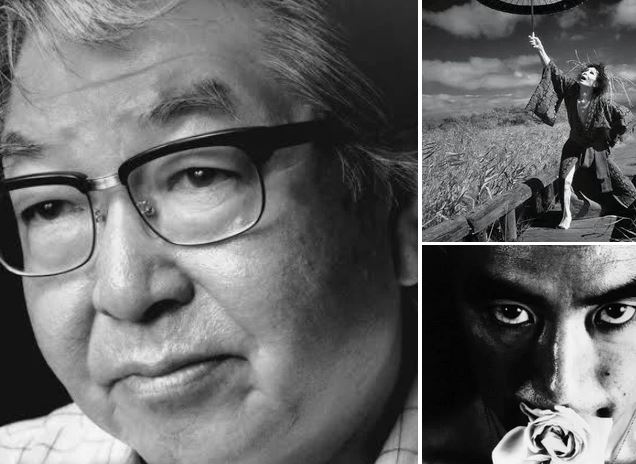
Eikoh Hosoe (細江英公) was born in 1933 in Yonezawa, Yamagata Prefecture, and grew up in Tokyo during the devastation and rebuilding that followed the Second World War.
These early experiences of war, fear, and social upheaval deeply shaped his imagination and later fed into the dark, intense atmosphere of his photographs.
Originally named Toshihiro Hosoe, he later changed his name to “Eikoh” as a statement of intent: he wanted to capture a new Japan with his camera.
By the early 1950s, the young Eikoh Hosoe was already winning recognition, taking the grand prize in the student division of the Fuji Photo Contest in 1951.
He studied at the Tokyo College of Photography (later Tokyo Polytechnic University) and graduated in 1954 before starting work as a freelance photographer for magazines. This period placed him at the heart of Tokyo’s growing avant‑garde community.
Early career and the Japanese avant‑garde
From the beginning, Eikoh Hosoe was more interested in experimentation than in safe, commercial images. He joined Demokrato, an avant‑garde artists’ group led by Ei‑Q, which encouraged breaking rules and rejecting traditional realism in favour of personal expression. In 1959, he co‑founded the legendary VIVO collective alongside photographers such as Shomei Tomatsu, Ikko Narahara, Kikuji Kawada, and Akira Sato. VIVO became a powerful platform for photographers who wanted to treat photography as an art form equal to painting, literature, and film.
Eikoh Hosoe also explored film and multi‑disciplinary art. In 1960 he helped create the Jazz Film Laboratory, a group that combined experimental cinema, music, and performance to produce intense, expressive works like his short film “Navel and A‑Bomb.” This mixing of media—dance, theatre, literature, and photography—became a hallmark of his style and later collaborations.
Style: bodies, darkness, and psychological drama
The name “Eikoh Hosoe” is almost synonymous with high‑contrast black‑and‑white images of the human body pushed into extreme situations. His photographs often explore themes such as death, erotic obsession, irrationality, and the subconscious, using dramatic lighting, unusual angles, and almost theatrical staging. Instead of recording reality, he built what he called a kind of “photographic theatre,” a space where performers and camera created a new, psychological reality.
In some series, the figures are nearly abstract, twisted into graphic forms of light and shadow, while in others they are charged with myth, religion, and folklore. This is one reason art historians describe Eikoh Hosoe as a key figure in freeing Japanese photography from a narrow documentary role and pushing it towards expressionism and surrealism.
Collaboration with Tatsumi Hijikata and Butoh
One of the most important relationships in Eikoh Hosoe’s career was with the dancer Tatsumi Hijikata, a founder of the radical Butoh dance movement. Hosoe first encountered Hijikata in 1958 when the dancer staged a shocking performance based on Yukio Mishima’s novel “Forbidden Colors,” involving two dancers and a live chicken on stage. Hosoe later described the performance as “ferocious,” and it completely changed how he thought about photography and performance.
Their most famous collaboration is the series “Kamaitachi,” created in the 1960s and published as a photobook in 1969. In these images, Hijikata plays a demonic trickster spirit from rural folklore, moving through rice fields and villages in Tohoku, the region where Hosoe had been evacuated as a child during the war. The photos feel like half‑remembered nightmares—part documentary, part myth, part personal memory—and they are now considered one of the great masterpieces of 20th‑century photography.
Collaboration with Yukio Mishima: Ordeal by Roses
Another key collaboration that made “Eikoh Hosoe” famous around the world was his work with celebrated writer Yukio Mishima. Mishima, already a major literary figure, posed for Hosoe in a series of staged, symbolic, and often erotic images that explored themes of beauty, death, and self‑sacrifice. The resulting book, “Barakei” (often translated as “Ordeal by Roses”), was first published in the 1960s and later reissued in expanded editions.
Mishima himself said that Hosoe’s photographs allowed him to live in a grotesque, barbaric inner world that was at the same time strangely lyrical. For Hosoe, the sessions with Mishima were not simple portrait shoots but collaborative performances, with the writer acting out roles in a visual drama crafted by the photographer. Today, “Ordeal by Roses” is widely regarded as one of the most complex and influential photo books ever made.
Teaching, mentoring, and institutional work
The name “Eikoh Hosoe” is also closely tied to education and institution‑building in Japanese photography. From the late 1960s he taught at Tokyo’s School of Photography, later continuing at the College of Photography (Tokyo Polytechnic University), shaping generations of younger photographers. Among those influenced by him was Daido Moriyama, who even worked as Hosoe’s assistant early in his career.
In 1995, Eikoh Hosoe became director of the Kiyosato Museum of Photographic Arts in Yamanashi Prefecture, a museum known for supporting young photographers and collecting contemporary work. He also served as vice president of the Japanese Photographers Association from 1981, playing a key role in promoting photography within Japan and abroad. Through exhibitions, workshops, and juries, he helped build the infrastructure that supports Japanese photography today.
Awards, recognition, and global presence
Over his long career, Eikoh Hosoe received many awards that underline just how influential he became. He was honoured with a Special Award from the Photographic Society of Japan in 2002, and in 2003 he received a special 150th Anniversary Medal and Honorary Fellowship from the Royal Photographic Society in the UK for his contribution to photographic art. In 2010 he was named a Person of Cultural Merit in Japan, one of the country’s highest honours for artists and cultural figures.
Major museums across the world hold works by Eikoh Hosoe, including the Museum of Modern Art in New York, the Stedelijk Museum in Amsterdam, and the Victoria and Albert Museum in London. Recent exhibitions and book projects, such as large retrospective surveys of his work, continue to introduce new audiences to his radical vision. Even into the 2020s, galleries and fairs in Europe and Japan have featured his photographs in dedicated shows.
Later life and legacy
Eikoh Hosoe remained active well into old age, curating exhibitions, publishing books, and speaking about photography and art. A major retrospective celebrating “90 Years of Eikoh Hosoe” was held in Tokyo in 2023, underlining his status as a living legend of Japanese photography. He died in September 2024 at the age of 91, prompting tributes that described him as an artist who had set Japanese photography on a completely new course.
Today, when people talk about the history of Japanese photography, the name “Eikoh Hosoe” is unavoidable. He helped shift the medium from straightforward documentation to something much more psychological, theatrical, and collaborative. Through groups like VIVO, institutions like the Kiyosato Museum, and his teaching and mentoring, he built a bridge between generations of photographers and between Japan and the wider art world.
Why “Eikoh Hosoe” still matters
For anyone interested in photography, art history, or post‑war Japanese culture, exploring the work of Eikoh Hosoe is incredibly rewarding. His images are not easy or comfortable; they are intense, layered, and sometimes unsettling, but that is exactly what makes them powerful. They show how photography can become a stage where bodies, myths, memories, and politics collide.
Searching for “Eikoh Hosoe” today opens a door to a rich world of photobooks, exhibitions, essays, and films that continue to inspire photographers, designers, filmmakers, and artists of all kinds. His collaborations with Yukio Mishima, Tatsumi Hijikata, and others are now classics, studied in universities and collected by major museums. In short, Eikoh Hosoe did not just take photographs—he expanded what photography could be, and that legacy continues to shape visual culture worldwide.