Lifestyle
Biology 223: How to Finally Master This Challenging Class
If you’re currently enrolled in Biology 223, or you’re preparing to take it soon, you’ve probably already heard the rumors:
“Biology 223 is brutal.”
“It's so much memorization.”
“You need to study nonstop.”
“It’s one of the hardest classes in the program.”
And to be fair… the reputation isn’t entirely wrong.
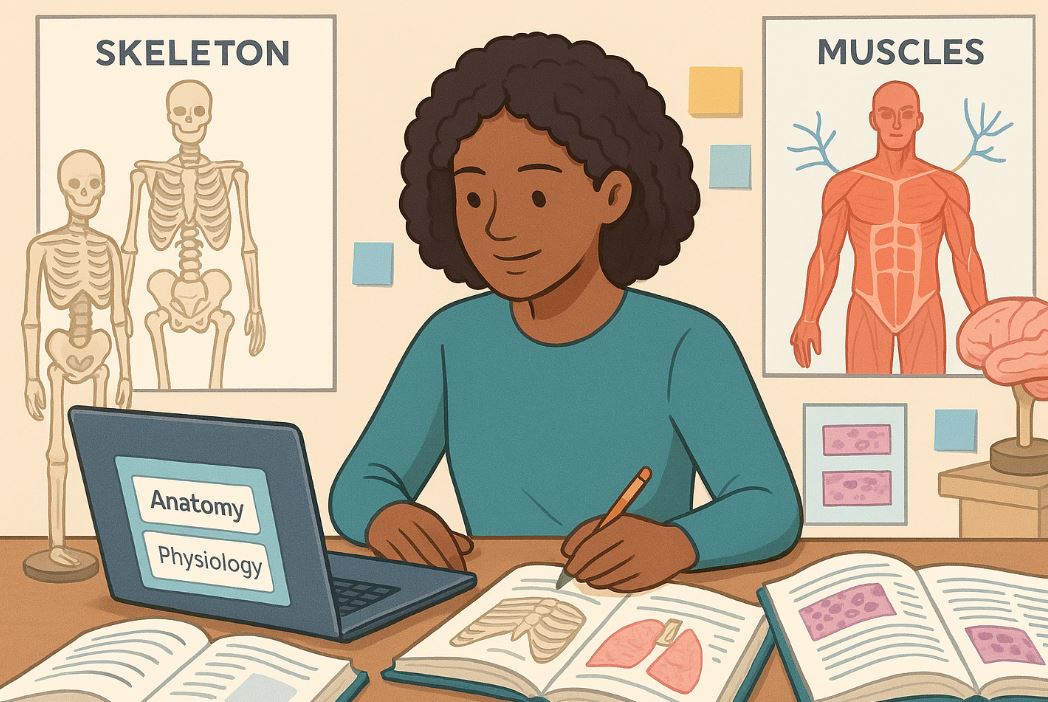
Biology 223—whether you’re taking it at CSN or another college—covers intense, foundational material in human anatomy and physiology. It demands a lot of memorization, understanding, and application.
But here’s the good news:
You can absolutely succeed in Biology 223, even if you struggle with science, even if you feel overwhelmed, and even if you’ve never taken a class like this before.
The secret isn’t to study harder.
It’s to study smarter, using practical strategies that align with the way this course works.
This article will break down:
-
what makes Biology 223 so difficult
-
the most common problems students face
-
how to actually understand the material instead of memorizing blindly
-
proven study strategies that help you pass your exams
-
how tools like flashcards, active recall, and spaced repetition fit into your routine
-
how to overcome test anxiety and information overload
-
and the exact steps to build a study plan that gets results
Let’s jump in.
What Exactly Is Biology 223?
Most colleges offer Biology 223 as a core course for students in:
-
nursing
-
dental hygiene
-
medical assisting
-
physical therapy
-
kinesiology
-
EMT / paramedicine
-
other health science programs
The class generally focuses on:
-
human anatomy
-
tissues and organ systems
-
neuromuscular physiology
-
skeletal system and articulations
-
muscular system
-
nervous system and special senses
Simply put:
Biology 223 is where you learn how the human body is built and how it works.
This means lots of:
-
terminology
-
diagrams
-
physiological processes
-
cell-level functions
-
lab models
-
histology slides
-
systems-level interactions
If you’ve ever flipped through a human anatomy textbook, you already know why students panic.
Why Is Biology 223 So Hard? (And Why That’s Totally Normal)
Students struggle with Biology 223 for a few predictable reasons. If any of these sound familiar, don’t worry—you’re not alone.
Problem #1: Overwhelming Amounts of Memorization
This class requires learning:
-
bone names
-
bone markings
-
muscle origins and insertions
-
nerve functions
-
brain structures
-
connective tissue components
-
and hundreds of terms
If you try to brute-force memorize everything, you will burn out fast.
Solution:
Use active recall and spaced repetition. These techniques work 10x better than re-reading. Flashcards, quizzes, and teaching the material aloud make information stick.
Problem #2: Students Don’t Understand the “Big Picture”
Many students memorize individual facts, but fail to understand how the systems actually interact.
Examples:
-
How neurons communicate with muscles
-
Why ion channels matter in action potentials
-
How bone remodeling works
-
How muscle contraction actually happens at the molecular level
Solution:
Break each chapter into three parts:
-
Structure
-
Function
-
Connection to other systems
This transforms Biology 223 from random facts into an interconnected story.
Problem #3: Forgetting What You Studied Last Week
Biology exams often cover multiple chapters, sometimes the entire unit.
So even if you study hard for one week, you may forget everything before the final.
Solution:
Use spaced repetition.
Review small sections frequently instead of cramming giant chapters.
Problem #4: Test Questions Are More Detailed Than Expected
You think you understand the topic…
Then the exam asks:
“Which specific connective tissue layer surrounds the fascicle?”
“What ion binds to troponin during muscle contraction?”
“Which cranial nerve innervates the lateral rectus muscle?”
These questions require precision, not general knowledge.
Solution:
Practice with challenging flashcards or quizzes that mimic exam difficulty.
Biology 223 Breakdown: What You Actually Need to Learn
Below is a clearer, friendlier overview of the main topics you’ll tackle in Biology 223—written in a way that helps you understand instead of panic.
1. Tissues and Histology
You’ll start with:
-
epithelial tissues
-
connective tissues
-
muscle tissues
-
nervous tissues
What makes this hard?
Histology slides can look like confusing blobs.
How to make it easier:
Learn patterns:
-
“Open spaces = connective tissue.”
-
“Layers = epithelium.”
-
“Striations = skeletal muscle.”
Your brain loves shortcuts.
2. The Skeletal System
You’ll memorize:
-
bone names
-
landmarks
-
types of joints
-
bone cells (osteoblasts, osteoclasts)
-
bone remodeling
Best strategy:
Use real or 3D models.
Seeing bones in physical space helps more than flat pictures.
3. The Muscular System
This is one of the most challenging units.
You’ll cover:
-
muscle anatomy
-
sliding filament theory
-
muscle physiology
-
muscle types
-
neuromuscular junction
-
muscle imbalances
This chapter requires BOTH memorization and deep understanding.
Solution:
Start with steps:
-
A neuron fires
-
ACh is released
-
Sodium channels open
-
Action potential travels
-
Calcium is released
-
Troponin/tropomyosin expose binding sites
-
Myosin pulls actin
-
ATP resets the head
If you understand the process, the exam becomes easier.
4. The Nervous System
Another heavy chapter packed with:
-
neuron structure
-
action potentials
-
neurotransmitters
-
CNS vs PNS
-
brain regions
-
spinal nerves
-
reflex arcs
Most students struggle with action potentials.
Solution:
Draw it.
Visualizing ion movement makes the concept click.
5. Special Senses
Includes:
-
vision
-
hearing
-
smell
-
taste
-
balance
There are a LOT of structures (especially in the ear and eye).
Solution:
Group names by location, not random lists.
How to Build a Study Plan That Actually Works for Biology 223
Instead of guessing what to study or drowning in your notes, follow this simple weekly plan.
Step 1: Preview the Chapter Before Lecture
Spend 15 minutes skimming:
-
headings
-
diagrams
-
bold terms
Your brain learns faster when it has context.
Step 2: Attend Lecture and Focus on What Your Teacher Repeats
If an instructor repeats something 3 times…
It’s going to be on the exam.
Step 3: Summarize in Your Own Words
After class, write a 5–10 sentence summary.
This transforms your brain from “memory mode” into “understanding mode.”
Step 4: Use Flashcards for Precision-Based Facts
Flashcards are perfect for:
-
bone markings
-
muscle origins/insertions
-
cranial nerves
-
action potential steps
-
histology identification
-
definitions
Apps like Brainscape, Quizlet, and Anki are excellent for active recall.
Step 5: Teach the Material Out Loud
If you can teach a concept, you truly understand it.
Try this:
“Explain action potentials to your wall like it’s a confused toddler.”
Works every time.
Step 6: Weekly Review Sessions
Every Sunday, spend 45 minutes reviewing the entire week’s material.
This prevents the “I forgot everything!” problem before exams.
How to Handle Labs in Biology 223
Labs are equally important and require different strategies.
1. Don’t Just Memorize the Model—Understand It
If you only memorize:
“That pink blob is the cerebellum”
…you'll get destroyed on lab practicals where the model looks different.
Instead:
Look for patterns, shapes, and landmarks.
2. Take Pictures of Every Lab Model
Most students regret not doing this.
Take clear photos of:
-
bones
-
muscles
-
brain models
-
nerve models
-
tissue slides
Label them on your phone later.
3. Practice with Online Models
Apps like Complete Anatomy or Visible Body help a LOT when identifying structures.
Top Mistakes Students Make in Biology 223
Avoid these at all costs:
❌ Mistake 1: Memorizing Without Understanding
Memorization alone fails in chapters like muscle contraction or nervous system physiology.
❌ Mistake 2: Waiting Too Long to Study
This class is cumulative.
Cramming does nothing.
❌ Mistake 3: Using Only Quizlet Sets Made by Others
Some cards are inaccurate or too simple.
Create your own—you learn during the process.
❌ Mistake 4: Ignoring the Lab Portion
Labs often make up 30–40% of the grade.
❌ Mistake 5: Skipping Practice Tests
Your brain needs exam-level difficulty, not easy flashcards.
Problem–Solution Summary for Biology 223
Here’s the quick breakdown:
| Problem | Why It Happens | Solution |
|---|---|---|
| Too much memorization | Facts overload | Active recall + spaced repetition |
| Forgetting old chapters | No review cycles | Weekly review sessions |
| Hard exam questions | Lack of application | Practice challenging questions |
| Lab practicals are confusing | Models differ | Learn patterns, not just shapes |
| Anxiety | Overwhelm | Smaller study blocks + summaries |