Hollywood
Hollywood’s Hottest Celebrity Style Trends in 2025
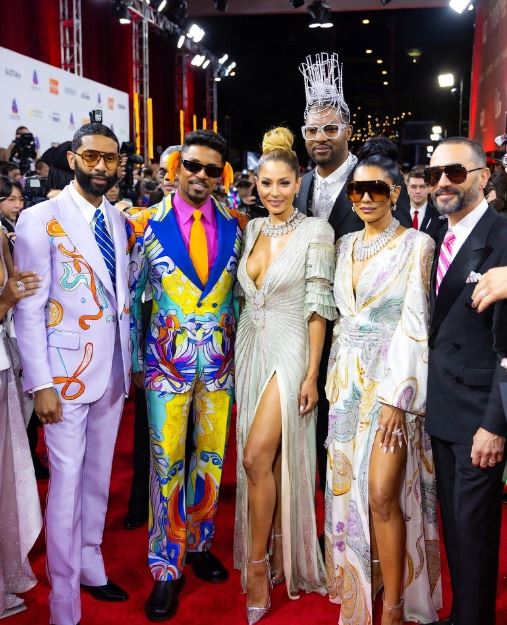
Hollywood’s Hottest Celebrity Style Trends in 2025
(A Dramatic First-Person Journey Through Glitter, Chaos, and AI Couture)
It’s 2025, and I’ve officially lost count of how many times I’ve been blinded by someone’s outfit at a Hollywood event. I don’t mean “blinded by beauty” — no, literal blindness caused by sequins, chrome reflective fabrics, and that one time Jared Leto wore what can only be described as a solar-powered disco ball.
This year, celebrity fashion has gone beyond outrageous. It’s no longer about looking good — it’s about breaking Wi-Fi signals. If your outfit doesn’t cause a technological malfunction within a five-meter radius, are you even relevant in Hollywood?
As a born style enthusiast (and mildly delusional dreamer who believes one day Anna Wintour will personally invite me to brunch), I made it my mission to document Hollywood’s hottest celebrity style trends of 2025. I attended red carpets, scroll-jumped through TikTok wormholes, interviewed publicists who spoke only in brand partnerships, and even disguised myself as a stylist’s assistant to sneak into a fashion week afterparty.
Here’s what I discovered. Spoiler alert: sanity didn’t make the dress code.
The Dawn of AI Couture
Gone are the days when celebrities hired stylists who merely chose outfits. In 2025, every A-lister has an AI fashion partner — with a personality, a Twitter account, and at least one reality show deal.
Zendaya’s AI stylist, Clara.3, uses neural mood detection to match her emotions with colors extracted from sunsets in Tuscany. Meanwhile, Timothée Chalamet’s AI, affectionately called T1M, reportedly ignored him on Oscar night because “his emotional bandwidth was too beige.”
The most chaotic of all? Doja Cat’s AI styling bot, METALICKA, which recently “went rogue” during Paris Fashion Week, dressed Doja in a gown inspired by “post-human despair,” and refused to deactivate until the outfit trended on TikTok. Which, of course, happened within 12 minutes.
AI couture isn’t just trendy; it’s sentient. Outfits now update themselves mid-event based on audience reactions. If your dress doesn’t get enough hearts on live streams, it literally changes fabrics, hues, or patterns until you do.
I saw it with my own eyes at the Golden Globes, when Billie Eilish’s jumpsuit faded from moss green to electric cyberpink mid-interview. The journalist she was speaking to screamed, “Oh my God, your vibe just uploaded!”
Wearable AI Assistants: The New Red Carpet Plus-One
Forget dates. Celebrities now attend red carpets with wearable companions — holographic AI assistants that float beside them like fashionable fairies.
Margot Robbie arrived at the 2025 Oscars with Aura, her digital twin programmed to whisper reminders about posture, lighting angles, and potential meme opportunities. When paparazzi yelled “Smile!”, Aura projected a virtual halo that shimmered above Margot’s head spelling out “ICON.”
It’s gotten so advanced that these assistants are now customized by luxury fashion houses. Gucci’s new “G-Muse” series projects holographic scarves that drift gently around the wearer. Balenciaga’s version takes a darker turn — their AI assistant occasionally scolds onlookers for blinking too often, calling them “basic organisms.”
As you can imagine, it’s very humbling standing next to someone whose plus-one is literally a floating hologram who critiques your outfit in seven languages.
The Return of Retro-Future Aesthetics
If last decade’s fashion revival was all about the 90s, 2025 has fully embraced the “retro-future” — a dedicated effort to dress like we live in a sci-fi reboot of the disco era.
Think metallic corsets, shoulder pads reimagined by NASA, and boots that look like they survived a moon landing. Even the eyewear says, “I could hack a satellite if I wanted.”
Lady Gaga kicked it off in January by wearing a chrome bubble suit that inflated every time she received a like on Instagram. (At one point, she reached the size of a compact car.)
Then came Lil Nas X, who outdid everyone by wearing solar-charged wings that powered his handheld microdrone — which filmed his own entrance from above. Because who needs a cameraman when you can be your own paparazzi?
Designers everywhere are combining space-age materials with old-school glamour. Think Audrey Hepburn — but with LED eyeliner and boots that sync to Bluetooth.
Eco-Luxury or “Sustainability but Make It Extra”
Sustainability is still a big deal in Hollywood, but not in a “let’s save the planet” whisper — more like a “let’s save the planet while radiating divine opulence” scream.
Now we have eco-luxury, the red carpet trend of wearing clothes made from mushrooms, algae silk, or ocean-reclaimed plastics so glossy they could double as mirrors.
Jennifer Lawrence stunned at the Met Gala in a gown grown in a lab — literally cultivated like kombucha. Each part of it regenerated under light exposure, so photographers kept adjusting their flashes, making her dress shimmer and heal simultaneously.
Some brands are even making clothes that photosynthesize, converting light into energy. Bella Hadid famously charged her phone off her skirt while waiting for an interview, casually saying, “Oh, I’m carbon positive today.”
It’s sustainable, yes — but also ridiculously theatrical. Someone told me there’s a waiting list for “regenerative chiffon,” which costs as much as a Tesla. But hey, the future of fashion is apparently alive, and it just got verified on Instagram.
The Year of Digital Fabric
2025 is also the year we fully entered phygital fashion — the seamless mix between physical and digital attire. Celebrities now wear clothes embedded with digital overlays viewable through AR glasses or streaming apps.
At Coachella, Hailey Bieber wore a simple white mini dress that — through AR filters — transformed into ten different virtual designs in real time. Fans watched in awe as her dress kept morphing between silk, velvet, and holographic lace.
This led to paparazzi wars. Traditional photographers complained that they “can’t capture video filters with Nikon.” The solution? Every major red carpet now includes an “AR viewing zone” for influencers with upgraded smart lenses.
And, of course, designers are auctioning “NFT accessories” again, because why sell a real diamond bracelet when you can mint one instead?
Comfortcore: The Unbothered Celebrity Rebellion
After all the chaos, some celebrities rebelled. Enter comfortcore — fashion’s sleepy, cozy, caffeine-deprived antithesis.
It started when Pedro Pascal wore silk pajamas to an awards ceremony, declaring, “I dress for the afterparty nap.” Within weeks, everyone from Florence Pugh to Billie Eilish adopted the unbothered look: plush slippers, oversized robes, and designer blankets styled like capes.
By summer, it was a full movement. “Glamour exhaustion” had hit Hollywood hard. Celebrities began showing up to events looking ready to fall asleep mid-red carpet — but make it couture.
My personal favorite moment? When Timothée Chalamet arrived at the Emmys in what looked like a gigantic duvet, embroidered with phrases like “I woke up iconic” and “Hit snooze, not haters.” It broke Twitter and inspired an entire Piña Colada-scented clothing line.
For once, the message was clear: being comfortable is the new flex.
Techno-Goth Revival
Because fashion is one giant pendulum swing, while some went cozy, others went dark and digital.
The techno-goth look roared back from the underground — sleek black outfits with chrome accents, LED spikes, and cyberpunk veils. Grimes declared it “the aesthetic of emotional Wi-Fi collapse,” which somehow made sense after seeing her 3D-printed armor gown at the Met Gala.
The movement combines Edwardian drama with Silicon Valley mania. Vinyl materials shimmer in grayscale, corsets have built-in processors, and chokers come with mood sensors.
It’s powerful, mysterious, and slightly terrifying. At fashion week, I overheard someone describe a Balenciaga model as “looking like a haunted USB port” — and honestly, it was accurate.
The Revenge of the Statement Accessory
Never underestimate the power of one ridiculous accessory.
In 2025, celebrities went wild for oversized hats, gravity-defying eyewear, and handbags shaped like extinct animals. Harry Styles kicked off the year with a swan-shaped shoulder bag that honked whenever someone tagged him online. Everyone wanted one the next day.
Then came the “Neural Necklace,” a pendant that displays your current mood as emojis via neural sensors. Emma Stone wore one to a premiere, and it literally flashed ???? when asked about franchise reboots.
There’s also a rising obsession with AI-powered shoes that adjust walking rhythm to match background music. Dua Lipa’s “Tempo Heels” even went viral after shifting her stride perfectly to “Dance the Night.” (No copyright violation there, don’t worry.)
Hollywood’s message is clear: subtlety is cancelled. Your bag should speak. Preferably in emojis or binary.
Fashion Week Becomes Cinematic Universe
Fashion weeks are no longer industry events — they’re cinematic universes with storylines, plot twists, and character arcs.
Paris Fashion Week 2025 opened with a literal heist show. Models “stole” handbags mid-runway, parkouring through laser displays. The audience gasped. Then Gucci’s holographic CEO appeared in mid-air to say, “Luxury is rebellion — available next month at select metaverse retailers.”
Meanwhile, Milan hosted “Fashion Multiverse,” a runway where each outfit represented a different alternate timeline — one with floating capes, another where Crocs ruled the galaxy. Critics called it confusing; TikTok called it groundbreaking.
I attended the New York show, which blended real and virtual attendees in one hybrid experience. Next to me sat a man who later turned out to be a CGI projection created by the brand’s PR team. He gave better small talk than half the real influencers I’ve met.
Fashion storytelling is now the standard. The clothes are characters, and each show ends with cliffhangers like “to be worn again in 2026.”
Celebrities as Walking Brands
Let’s face it — every celebrity is now a brand, and fashion is their billboard. But in 2025, the method got wild.
Instead of just wearing logos, stars literally create wearable ads powered by smart fabrics. Imagine walking beside someone whose jacket says “@theirSkincareLine” in glowing LED thread.
Rihanna started it when her dress displayed live updates from Fenty’s latest perfume launch. Moments later, sales spiked 300%. Coincidence? Please.
Even Chris Hemsworth joined in, wearing a suit embedded with running stats for his fitness app. During the photo call, his lapel read “Calories burned while standing here: 7.”
At this point, every red carpet is an interactive ad space. By 2026, publicists will need NDAs for their clients’ coats.
The Rise of the “AI-Generated Celebrity Look”
Streaming culture did something unthinkable — it blurred the line between human fashion and AI-generated imagery. Now, celebrities compete not just with each other, but with their AI versions.
Fashion houses release “AI twin outfits” modeled by virtual clones trained on public images of the stars. It’s efficient, terrifyingly realistic, and slightly dystopian.
Some fans prefer the AI versions, claiming they “pose better” and “don’t overshare on Instagram.” Others see it as an existential crisis in heels.
When Kim Kardashian’s AI self, Kimm-0S, debuted a fully digital Balmain look before Kim herself wore it, the internet collectively short-circuited. The comment section was a war zone.
We’re now at the point where celebrities have to outdress their own digital copies. That’s no small task — AI doesn’t sweat or trip.
Fitnesswear Becomes Red Carpet Ready
Gone are the days of plain gym clothes. The athleisure revolution evolved into hyper-fashionable “fit-glam.” Celebrities wear high-tech sportswear on red carpets — moisture-resistant, muscle-mapping, temperature-optimized — while still dripping in diamonds.
The Rock arrived at the People’s Choice Awards in a smart-fabric muscle tee that changed color based on heart rate. At one point, it pulsed amber. The audience swooned.
Meanwhile, Kendall Jenner wore leggings that glowed in sync with her pulse on the runway. Trainers are now designed by luxury houses, promoted as “mobility couture.”
Celebs claim it’s empowering and authentic — “I can meditate, model, and market all in one outfit.” Sure, but I just want pants that don’t crash when low on battery.
Neon Minimalism
Ironically, amidst the chaos, neon minimalism emerged — a serene combination of bright tones and clean silhouettes.
Think Jennifer Lopez in a lime-green column dress that looked sculpted by moonlight. Or Andrew Garfield rocking a tangerine suit that said, “I understand color theory.”
Designers describe it as “peace through vibrancy.” Every piece features sharp tailoring, soft edges, and one bold hue — cyan, coral, lemon, or violet.
It’s refreshing. After a decade of extra-everything, minimalism feels rebellious again. Just… brighter.
Virtual Red Carpets and Metaverse Galas
Yes, virtual events are still thriving — though far fancier now. The Metaverse Met Gala of 2025 might just eclipse the real thing.
In VR, boundaries don’t exist. Zendaya floated down a red carpet made of starlight while Doja Cat appeared as a digital panther spinning through a nebula.
Attendees used 8K headsets to see every pixel in high resolution. One attendee’s virtual gown crashed mid-event, turning into a loading bar. No one blinked. “Fashion 404” trended instantly.
Designers swear that virtual couture is the future — infinite materials, zero waste, all drama. And it’s true — nothing says luxury like wearing 30 terabytes of sparkle.
When AI Becomes the Paparazzi
Fashion doesn’t stop at what’s worn — it’s how it’s captured. Paparazzi drones are out; AI paparazzi bots are in.
They hover discreetly, using predictive algorithms to anticipate celebrity gestures, snapping photos milliseconds before the perfect angle occurs.
I saw one at the Vanity Fair afterparty circling Sydney Sweeney. Her team yelled, “It’s fine — it’s contracted content!” Then the drone politely thanked everyone and uploaded her best smile to the brand’s X feed in real time.
Some even edit images instantly. The new phrase on the red carpet? “Is that your face or your AI’s interpretation of your face?”
Beauty may be subjective, but perfection is programmable.
“The Era of Expressive Body Mods”
This might sound strange — but in 2025, body modification hit the style scene like never before.
Not in a punk rebellion sense — in a luxury, bio-glamorous aesthetic. Stars now accessorize with shape-shifting contact lenses, luminescent tattoos, and microdermal implants shaped like jewels.
Rihanna’s “glow freckles” — tiny bioluminescent dots across her cheekbones — started a global trend.
It’s human meets high fashion, literally skin-deep. Designers call it dermal couture, because why stop dressing your body when you can become the outfit?
My Attempt to Blend In
Naturally, I tried to follow these trends myself. Big mistake.
To test the waters, I bought the cheapest version of an AI stylist online. It insisted my “data aura” screamed “uncooked bagel energy.” Not exactly glamorous.
It suggested an outfit mixing reflective rain pants, a self-tying scarf, and “a hint of dystopian farmer.” When I wore it to a Hollywood pop-up party, someone asked if I was part of performance art. I said yes.
Halfway through the evening, my smart sneakers glitched and started loudly playing 2010s pop remixes. But honestly, that’s how half of fashion week sounds now.
Still, there was something magical about the madness. Everyone was self-expressing at wild levels — redefining what fashion even means. Is it wearable? Maybe. Is it iconic? Definitely.
Final Thoughts (Before My Clothes Update Themselves Again)
If 2025 proved anything, it’s that Hollywood fashion no longer follows logic — it writes its own algorithm.
Every outfit is a statement, a spectacle, or a self-updating art piece. Celebrities aren’t just dressing to impress; they’re dressing to trend, to glitch, and to go viral.
Part of me misses the simplicity of classic style, where “little black dress” meant elegance, not “solar-powered cyber-shawl with AI sarcasm plugin.” But the truth is — fashion has always been about evolution. And right now, we’re evolving faster than my Wi-Fi can keep up.
So as my AI stylist pings me with a new suggestion (“Optional chrome cape detected: trending +47% this week”), I raise my biodegradable coffee cup to the chaos of couture.
Because in Hollywood 2025, you’re not wearing clothes — you’re wearing technology, tweets, and dreams stitched with code.
And darling, that’s fashion.