Hollywood
Keanu Reeves: The Haunting of a Broken Soul – A Personal Story of Love, Loss, and Shadows
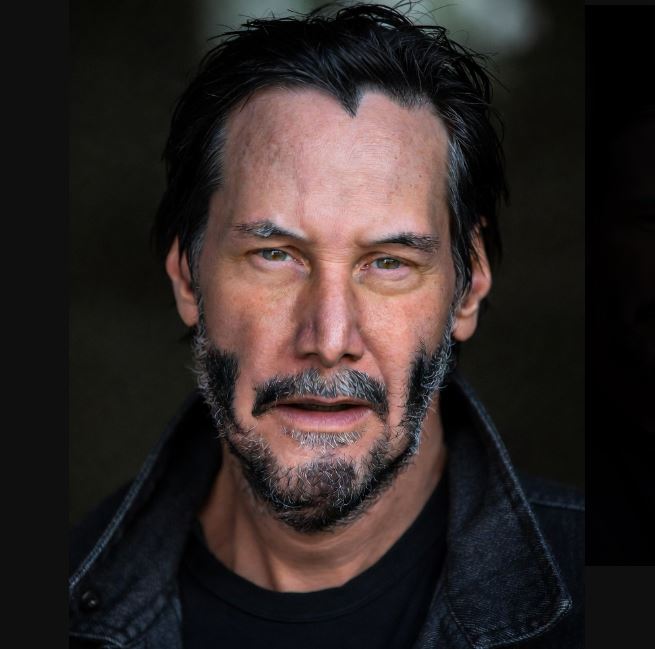
An intimate, haunting reflection on the life behind the Hollywood legend.
A Night That Wouldn’t Let Me Sleep
It started on one of those sleepless nights — the kind that makes walls whisper and shadows grow longer than they should. I wasn’t looking for anything in particular, just scrolling through movies, articles, and random biographies until I stumbled upon a name I knew well: Keanu Reeves.
Everyone knows him — the stoic warrior of “John Wick,” the chosen one in “The Matrix,” the actor whose calmness makes chaos seem poetic. But as I kept reading, the glossy image of Hollywood’s kindest star began to fade, replaced by something painfully human. It was the story of a man haunted not by monsters or ghosts, but by loss so deep it bends reality itself.
That night, I couldn’t turn away. I felt as though I’d opened a door I shouldn’t have. Behind it, there was quiet — and tragedy.
The Love Story That Never Reached Its Ending
Before the internet ever idolized him, before memes turned his solitude into “Sad Keanu,” there was Jennifer Syme. She wasn’t famous in the way actors are; she was real — raw, beautiful, and part of a love that seemed untouched by Hollywood’s lights.
They met in the late 1990s, when Keanu was still riding the massive wave of fame after The Matrix. For a man who rarely spoke about his private life, Jennifer was the exception. Friends said he smiled differently when she was around — genuinely, like someone who had found something sacred amid the noise of cameras and red carpets.
They were expecting a baby girl, whom they named Ava Archer Syme-Reeves. Ava was supposed to arrive in December 1999. But fate, that cruel and invisible storyteller, had another script written. The baby was stillborn at eight months. The loss shattered them both.
Some people think grief is loud — tears, screaming, breaking things in anger. But Keanu’s grief was silent. He withdrew into himself, away from the cameras, the parties, and even his friends. Jennifer, too, was consumed by sadness. Their relationship slowly dissolved under the unbearable weight of their shared tragedy.
As I read about it, I couldn’t breathe for a moment. Because I’ve seen that kind of quiet suffering before — in others, maybe even in myself. That hollow look that doesn’t ask for help because help wouldn’t bring back what’s gone.
When Death Returns for the Living
Then came April 2001 — only a little over a year later. Jennifer was driving alone along Cahuenga Boulevard in Los Angeles after attending a party at Marilyn Manson’s house. Her car lost control and crashed. She was thrown from the vehicle and died instantly. She was 28.
When I read that, the room around me seemed to tilt. It felt like the universe had played a cruel trick on someone who had already paid his dues to pain. The article said she was buried next to their daughter. Keanu carried her coffin.
I tried to imagine what it would be like — to stand before two graves, each carved with names that once meant the future. That moment must have frozen something inside him permanently. People say he’s never been the same since, and I believe it. How could anyone be?
He didn’t turn to self-destruction. That’s the strange thing about Keanu. He didn’t spiral publicly, didn’t lash out at the world. Instead, he disappeared inward, as though building a quiet cathedral of solitude inside himself — a place where pain could exist without being judged.
The Ghosts Behind Every Smile
There’s a picture of him online — sitting alone on a park bench, head slightly bowed, eating a sandwich. It became viral as a meme: Sad Keanu. People laughed, turned it into jokes, captioned it with irony. Yet when I look at that image, I see something entirely different.
That photo feels haunted.
Not in the way horror movies show ghosts, but in the way grief lingers like a whisper you can’t block out. It’s the same look survivors have when they’ve lost too much — a quiet sadness that doesn’t beg for sympathy, only understanding.
When an interviewer once asked him about death, he paused before replying: “I know that the ones who love us will miss us.”
That single sentence carries a lifetime of sorrow. It’s not poetic. It’s not intended to be profound. It’s just true.
I realized then that Keanu Reeves isn’t a man chasing fame or wealth. He’s chasing peace— maybe even forgiveness, though for what, only he knows.
Fame, Fortune, and the Hollow Room
The world often measures success by what you own: money, houses, awards. But what if success is what’s missing — the silence after applause, the emptiness after lights fade?
Keanu made millions from The Matrix franchise. He could easily have bought islands, jets, or mansions. Instead, he gave away most of his earnings to crew members, cancer research, and charities. In interviews, he once said, “Money is the last thing I think about.”
Maybe it’s because money can’t resurrect the dead. It can’t rewrite the story, or undo the crash, or make you hold your baby again. Instead, it becomes a shadow of everything you wished it could buy but never will — time, love, healing.
I think that’s what makes his story terrifying in a quiet, existential way: how grief robs meaning from privilege. The idea that no amount of fame can build a wall tall enough to keep sorrow out.
The Man Surrounded by Angels and Ghosts
Friends describe Keanu as gentle, shy, and humble — the kind of man who gives up his seat on the subway without fanfare. But in almost every account, there’s this underlying note of melancholy. As if he’s always somewhere slightly else, half here and half gone.
When I imagine his home, I picture it dimly lit, with the city humming faintly outside the window. Maybe there’s music playing — something slow, something that remembers. Maybe there’s a photograph of Jennifer and Ava tucked away in a drawer, or maybe it’s on a wall he passes every morning.
Sometimes I think he must talk to them. Not aloud, but in the way you talk to someone who still lives inside you — through thoughts, through silences. Sometimes love doesn’t die when the body does; it just changes shape, becoming something between earthly and ethereal.
That thought frightens me and comforts me all at once.
The Loneliness of Survival
There’s a horror that doesn’t involve blood or monsters — the horror of survival. Imagine being left behind over and over, forced to carry the memories of those who can’t return. That’s Keanu Reeves’ real curse.
He’s lost friends too — River Phoenix, his close companion, who died young from an overdose in 1993. It’s as if each person he loved vanished too soon, leaving him behind as the unwilling witness to everyone else’s ending.
And yet, he continues. Film after film, year after year, he gets up and walks into imaginary worlds where he can fight, rescue, avenge. Perhaps the cinema is his exorcism — a way to bleed quietly through art, to live out in fiction what life denied him in truth.
When you know someone has survived so much pain, every smile they give seems miraculous, fragile, and a little haunted. That’s how I see him: a man still breathing among ghosts.
The Fear That Mirrors Us
As I wrote these lines, I started realizing something unsettling — it wasn’t just his story that scared me. It was what it reflected back. Because what’s more terrifying than realizing that tragedy isn’t confined to movies? That it can touch anyone, anywhere, without reason or mercy?
Keanu’s pain feels universal because it taps into something we all carry: the certainty that love is temporary, and that time is merciless. The real monster isn’t death — it’s memory, whispering “what if” when the lights go out.
When I think of him now, I don’t see a movie star. I see a mirror. Someone who embodies the fear of losing everything that gives life meaning — and finding a way to keep moving anyway.
Maybe that’s why people love him so deeply. Because underneath his calm exterior, he’s just like us: broken, healing, haunted, trying.
Finding Beauty in the Darkness
There’s an odd beauty in Keanu’s story too — the kind that glows faintly in the dark, not despite the pain, but because of it. He reminds us that grief doesn’t have to be loud to be powerful. It can live quietly, teaching empathy, shaping kindness.
He once said, “Grief changes shape, but it never ends.” That line has stayed with me like a ghost. It’s both warning and comfort — a reminder that even though the pain stays, so does love. They’re two sides of the same haunting.
Sometimes, in the quiet moments before dawn, I think about him — sitting at a café, maybe, or watching the city fade beneath the rain. I imagine he smiles softly, not because he’s happy, but because he’s learned to live with the ghosts. That’s the most terrifying and beautiful truth of all: love doesn’t die. It just lingers, forever echoing through the spaces left behind.
Why His Tragedy Matters
So, why write about this? Why dwell in a story so heavy, so heartbreaking?
Because Keanu Reeves’s life isn’t just tabloid tragedy. It’s a reminder of human resilience, of how pain and grace can coexist. In a world obsessed with glamour and success, he stands as proof that empathy — the quiet kind — still exists.
And maybe, just maybe, his story warns us not to take love for granted. To hold people a little tighter. To leave fewer things unsaid. Because you never know when the universe will decide to rewrite your ending.
The Closing Shadow
When I close my laptop, the silence returns — the same silence that followed me when I first read his name that night. It’s strange how someone else’s pain can echo through your own soul, leaving you both unsettled and grateful at once.
Keanu Reeves is not a ghost, but he lives with them. His tragedy is not fiction, but it reads like one. And maybe that’s the true terror of his story — that it’s real, that love and death coexist in the same fragile timeline, and that even the gentlest souls can be haunted forever.
Still, in his survival, there’s something sacred. Because to endure love’s loss, again and again, and still be kind — that, perhaps, is what makes Keanu Reeves not just a human, but a quiet, enduring legend.